How Deep Should a Flagpole Be in the Ground? The Complete Guide
Flagpole Installation Depth Is More Important Than Most People Realize
Getting the depth wrong is one of the most common flagpole installation mistakes homeowners make. Too shallow and your pole becomes a safety hazard in high winds. Too deep and you waste time, concrete, and effort that did not need to be spent.
The right flagpole installation depth depends on several factors. This guide walks through all of them clearly.
The General Rule for Flagpole Depth
The standard rule used by most flagpole installers is to bury the pole or ground sleeve at a depth equal to 10% of the total pole height, plus two additional feet.

For example, a 20-foot flagpole should be set at a minimum depth of 4 feet. A 25-foot pole should go at least 4.5 feet into the ground. This calculation provides enough underground anchoring to handle typical residential wind loads without over-engineering the installation.
How Pole Height Affects Required Depth
Taller poles catch more wind, which creates more lateral force at the base. That force has to be absorbed by the ground, which is why depth requirements increase with height.
20-foot flagpole
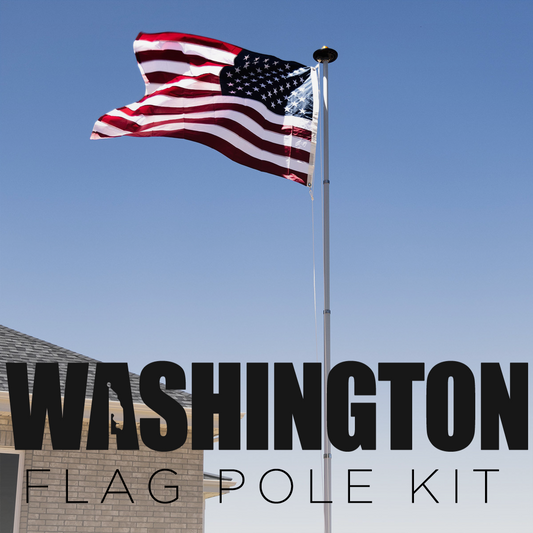
A minimum depth of 4 feet is standard for a 20-foot pole in average soil conditions. This is the most common residential height and the most manageable installation for most homeowners. The 20ft telescoping flagpole kit includes a ground sleeve sized for this depth range.
25-foot flagpole
Plan for at least 4.5 to 5 feet of depth at this height. Wind force increases significantly as pole height grows, so the extra depth is not optional in most climates.
Flagpoles over 25 feet
Installations at this height typically require a professional soil assessment. A reinforced concrete foundation may be needed rather than a standard sleeve-and-concrete setup.
How Soil Type Changes the Calculation
Depth requirements are based on average soil conditions. If your yard has soft, sandy, or waterlogged soil, you need to go deeper than the standard formula suggests.
Clay soil
Clay holds moisture and shifts significantly with freeze-thaw cycles. Add at least 6 inches of extra depth in clay-heavy yards and use a gravel base layer beneath the sleeve for drainage.
Sandy or loose soil
Sandy soil has low compaction and provides less lateral resistance. Go at least 12 inches deeper than the standard calculation and pack the concrete carefully to prevent voids around the sleeve.
Rocky soil
Rocky ground can limit how deep you are able to dig. In these cases, focus on maximizing the concrete collar width around the sleeve rather than depth alone. Our guide on flagpole foundations in rocky soil covers this situation in detail.
Standard loam or compacted soil
The base formula applies cleanly here. Average residential yards with well-compacted loam are the ideal conditions the standard depth calculation is designed for.
The Role of the Ground Sleeve
Most residential installations use a ground sleeve rather than setting the pole directly in concrete. The sleeve is a metal tube set in concrete, and the pole slides in from above.
This approach has a key advantage. If the pole is ever damaged, you can remove and replace it without breaking up the concrete foundation. A properly installed flagpole ground sleeve should sit just above grade level to prevent water from pooling inside and corroding the pole base over time.
How Much Concrete Do You Need
For a standard residential installation, a tube form filled with concrete around the sleeve is sufficient. The tube should extend the full depth of the hole and measure at least 10 to 12 inches in diameter.
Use fast-setting concrete mix for residential flagpole work. It firms up within 20 to 40 minutes, which keeps the sleeve from shifting while you work. Allow at least 24 hours of cure time before putting any lateral load on the installation.
Wind Ratings and Local Code Requirements
Some municipalities have specific requirements for flagpole installations, particularly for poles over 20 feet. Check with your local building department before you dig to confirm whether a permit is required in your area.
Higher wind zones require deeper installations and stronger concrete foundations regardless of pole height. If you live in a coastal or storm-prone region, always exceed the minimum depth recommendation by at least one foot.
How to Get Your Installation Right From the Start
A flagpole anchored correctly from day one requires almost no structural attention after installation. Taking the time to get the depth and concrete work right means you will not be digging it up and starting over after the first hard winter.

Follow this sequence for a clean, stable result. Calculate your required depth using the 10% plus 2 feet formula. Adjust for soil type and local wind conditions. Set a gravel drainage layer at the bottom of the hole before placing the sleeve. Brace the sleeve vertically and pour fast-setting concrete to grade level. Confirm it is plumb before the concrete sets, then allow full cure time before inserting the pole.
When you are ready to move forward with a complete setup, our flagpole kit collection includes everything needed for a durable installation from the ground up.
Related Posts